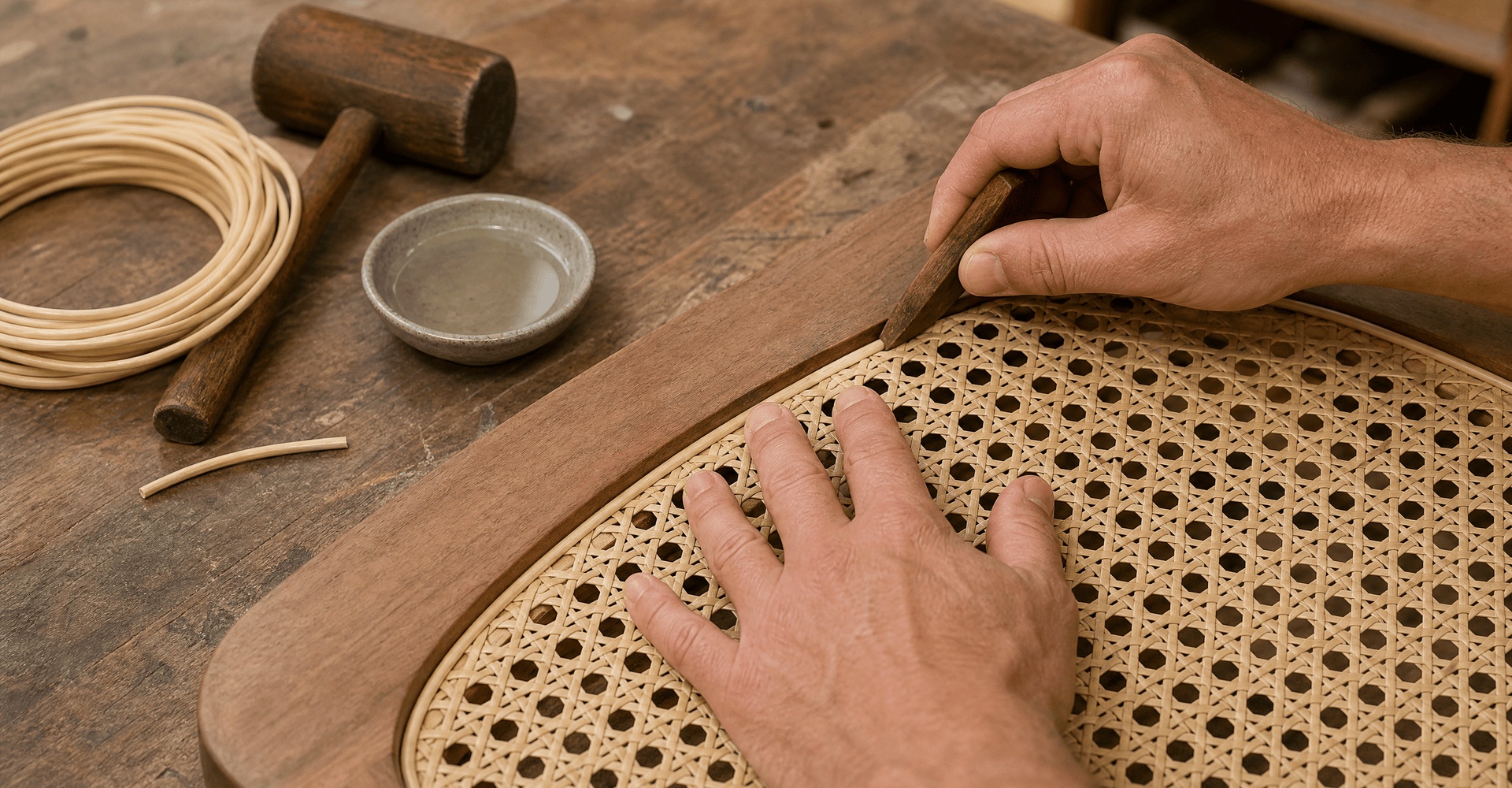
How to Measure Cane Webbing for a Chair or Cabinet: Roll Width, Mesh Size & Spline Size Guide
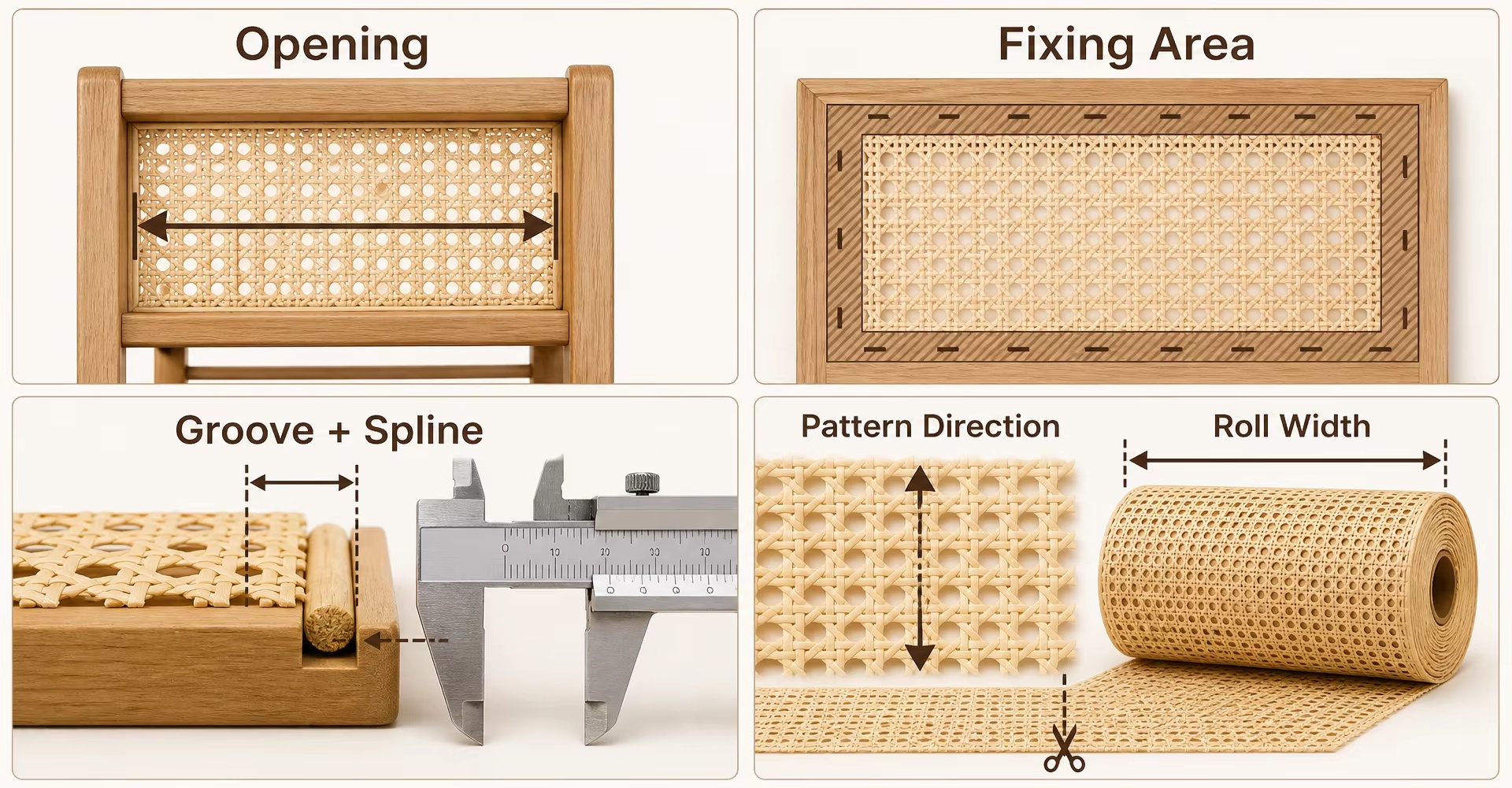
How to Measure Cane Webbing for a Chair or Cabinet: Roll Width, Mesh Size & Spline Size Guide
Measure the frame—not the damaged webbing—and account for the installation method. Record the opening, fixing area, groove width where applicable, and pattern direction; then add an installation allowance before choosing the roll.
This cane webbing size guide explains how to measure cane webbing, choose the right cane webbing roll width and cane webbing mesh size, and match a reed spline for chairs, cabinets, and other furniture panels.
Important: Dimensions and installation requirements vary by material. For production orders or valuable furniture, test a sample in the actual frame before cutting the full quantity.
What should you measure before ordering cane webbing?
Before you request a quote or place an order, record these four details:
- The visible opening: Measure the clear width and height of the area the webbing will cover.
- The fixing area: Identify where the webbing will be held—inside a groove, behind a cabinet frame, or directly onto the back of a panel.
- The groove width: For press-in installations, measure the width across the top of the groove so you can select a suitable spline.
- The pattern direction: Decide which way the weave should run, especially for square, herringbone, or decorative patterns.
Do not rely only on the size of the old webbing. It may have stretched, shrunk, torn, or been trimmed during the original installation. The frame is the more reliable reference.
How do you measure cane webbing for a chair seat or back?
If you are researching how to measure a chair for cane webbing, first identify whether the chair uses a groove-and-spline system or a stapled/tacked system.
For a chair with a groove and reed spline
Measure the opening from the inner edge of the groove on one side to the inner edge of the groove on the opposite side. Repeat for the front-to-back dimension. Next, measure the groove width across its top with a precise ruler or caliper.
Your cut piece must extend beyond the visible opening and reach into the groove on every side. The exact allowance depends on the groove position, weave, and installation technique. Rather than using one universal number, confirm the allowance against the actual chair frame and the specifications of your selected material.
For a chair with staples or tacks
Turn the chair over and find the surface where the webbing will be fixed. Measure the full area between the outer fixing points—not just the visible opening. The cut piece needs enough material to lie flat over the fixing zone and be secured without placing the fasteners too close to the edge.
For curved or irregular seats, make a paper or cardboard template. Mark the centerline and pattern direction on the template before transferring the outline to the webbing.
See Surika’s guide to press-in spline and staple installation.
How do you measure cane webbing for cabinet doors?
Measuring cane webbing for cabinet doors starts with identifying how the panel will be mounted.
- Rear-mounted panel: Measure the visible opening, then measure the overlap available on the back of the door. The finished piece must cover the opening and reach the attachment area on all four sides.
- Groove-mounted panel: Measure the opening and groove in the same way as a press-in chair panel.
- Framed removable panel: Measure the internal dimensions of the removable frame and check how much space the frame allows for the webbing and backing components.
Measure every door individually, especially on restored or handcrafted furniture. For a geometric weave, allow enough material to center the design consistently across all doors.
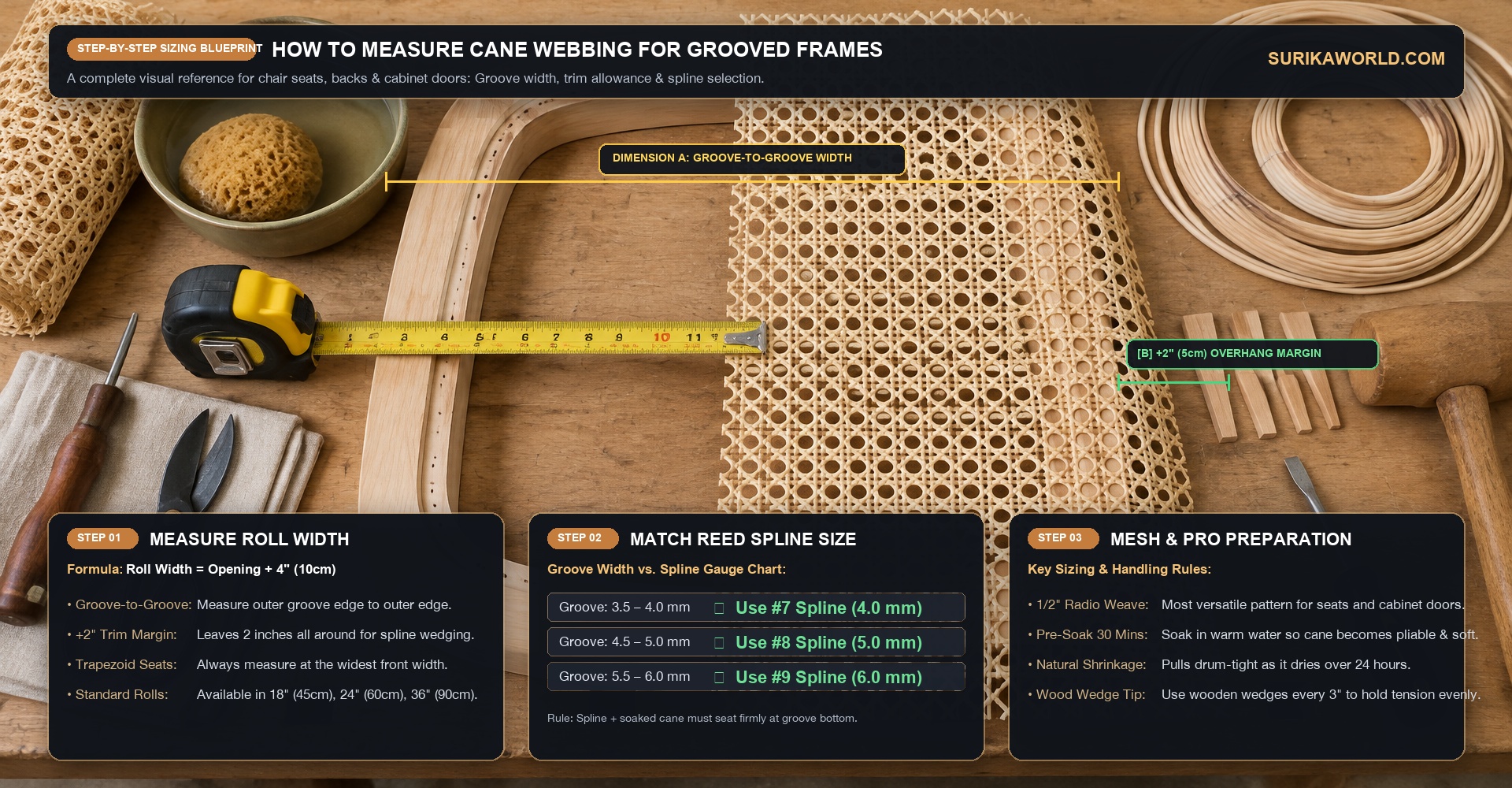
How much cane webbing do you need?
The basic calculation for how much cane webbing do I need is straightforward:
- Required cut width = opening width + left installation allowance + right installation allowance
- Required cut length = opening height + top installation allowance + bottom installation allowance
For multiple identical panels:
- Total running length = cut length per panel × number of panels + project waste allowance
Allow for the pattern, number of pieces, possible defects, and frame complexity. Square mesh is generally easier to plan than directional herringbone that must align across several doors.
Before ordering, draw a cutting layout with every pattern arrow pointing in the correct direction. This reveals whether a wider or narrower roll will be more economical.
How do you choose the right cane webbing roll width?
To choose the cane webbing roll width, compare your required cut width—not only the visible opening—with available rolls. Include the opening, installation allowance, pattern-centering space, and trimming margin.
For several narrow panels, a wider roll may fit pieces side by side, but it is not automatically more economical. Compare usable width, pattern repeat, and total running length. For production orders, send Surika the finished opening, cut size, quantity, fixing method, and pattern direction so the team can recommend a practical sample format.
How should you select mesh size and weave pattern?
The right cane webbing mesh size depends on appearance, scale, support, airflow, and application.
Open mesh
Open patterns create a light appearance for chair backs, cabinet doors, decorative panels, and screens. Fine patterns can suit small objects; larger patterns are more visible on doors and headboards.
Closed or dense weave
Denser patterns offer more visual coverage for privacy panels, headboards, and storage furniture. Directional designs such as herringbone require careful alignment.
Natural or plastic cane webbing
Natural cane offers organic variation and traditional texture. Plastic webbing can provide consistent color, easier maintenance, or suitability for more demanding environments. See Surika’s natural versus plastic cane webbing guide.
For load-bearing seats, frame design, span, weave, material, and installation all affect performance. Confirm the application with the supplier before production.
How do you choose the correct reed spline size?
A useful reed spline size chart should be based on the dimensions of the groove and the supplier’s actual spline range. As a starting point, measure the width across the top of the clean groove—not merely the depth and not only the old spline.
The spline must hold the webbing firmly without being forced into a groove that is too narrow. A spline that is too small may not secure the material; one that is too large may be difficult to install and could damage the frame.
Remove old glue and debris, then check the groove at several points. If the measurement falls between available sizes, request samples and test the webbing, spline, and adhesive together.
What are the most common measuring mistakes?
Avoid these five errors:
- Measuring only the visible opening. The webbing also needs material for fixing and trimming.
- Copying the old webbing dimensions. Old material may no longer reflect its original cut size.
- Ignoring pattern direction. Rotating a directional weave can change both appearance and cutting efficiency.
- Choosing spline by guesswork. Measure the cleaned groove and test the fit.
- Skipping a production sample. A physical sample can reveal tension, color, pattern scale, and installation issues before a full order is cut.
What information should you send to a cane webbing supplier?
A clear inquiry should include the application, opening and cut dimensions, panel quantity, groove width or fixing method, preferred material, indoor or outdoor use, weave, mesh, color, photos or drawings, destination, and delivery schedule.
Surika supplies rattan webbing and related furniture materials to designers, workshops, restorers, and manufacturers. Send dimensions and a project photo so the team can discuss suitable rolls, patterns, materials, and matching components before you order.
Frequently asked questions
Should cane webbing be measured before or after soaking?
Measure the frame and plan the dry cut size before installation. Follow the supplier’s preparation instructions for the specific webbing, because not every natural or synthetic product is handled in the same way.
How much extra cane webbing should I leave around the opening?
Leave enough material to reach and cover the complete fixing area on every side. The exact allowance varies by groove position, frame design, material, and installation method, so verify it on the actual frame rather than relying on one number for every project.
Can I join two pieces if my cane webbing is too narrow?
A seam is usually undesirable in a visible furniture panel and may affect appearance or performance. Selecting a roll that covers the complete cut width is normally the cleaner solution.
Does mesh size change the amount of material required?
The panel’s cut dimensions remain based on the frame and fixing allowance, but pattern repeat and centering can increase waste. Decorative or directional weaves may therefore require more careful layout planning.
How do I keep the pattern straight on several cabinet doors?
Mark a common vertical and horizontal centerline, keep every piece oriented in the same direction, and cut all panels using one documented reference point in the weave. Lay the pieces out together before installation to confirm alignment.
What should I do before ordering a large quantity?
Approve a physical sample in the real frame. Check color, mesh scale, tension, spline fit, fixing method, and finished appearance, then confirm the production specification in writing.
Measure the frame first—and order with confidence
Record the opening, fixing method, groove where applicable, pattern direction, and cutting allowances. Then compare the complete layout with available roll widths.
If you are unsure which webbing, mesh, or spline fits your project, send Surika the frame dimensions, quantity, application, and photos. This helps the team select the material, reduce waste, and move from sampling to production confidently.
How to Choose Mixed-Color Plastic Cane Webbing for Modern Furniture Design