How to Choose Mixed-Color Plastic Cane Webbing for Modern Furniture Design
How to Choose Mixed-Color Plastic Cane Webbing for Modern Furniture Design
Furniture designers are rediscovering cane surfaces, but today’s projects often demand more color flexibility than a single natural finish can provide. This is where mixed-color plastic cane webbing becomes especially useful. By combining more than one shade within the weave, the material creates visual depth, soft variation, and a more natural-looking surface than a flat, solid color.
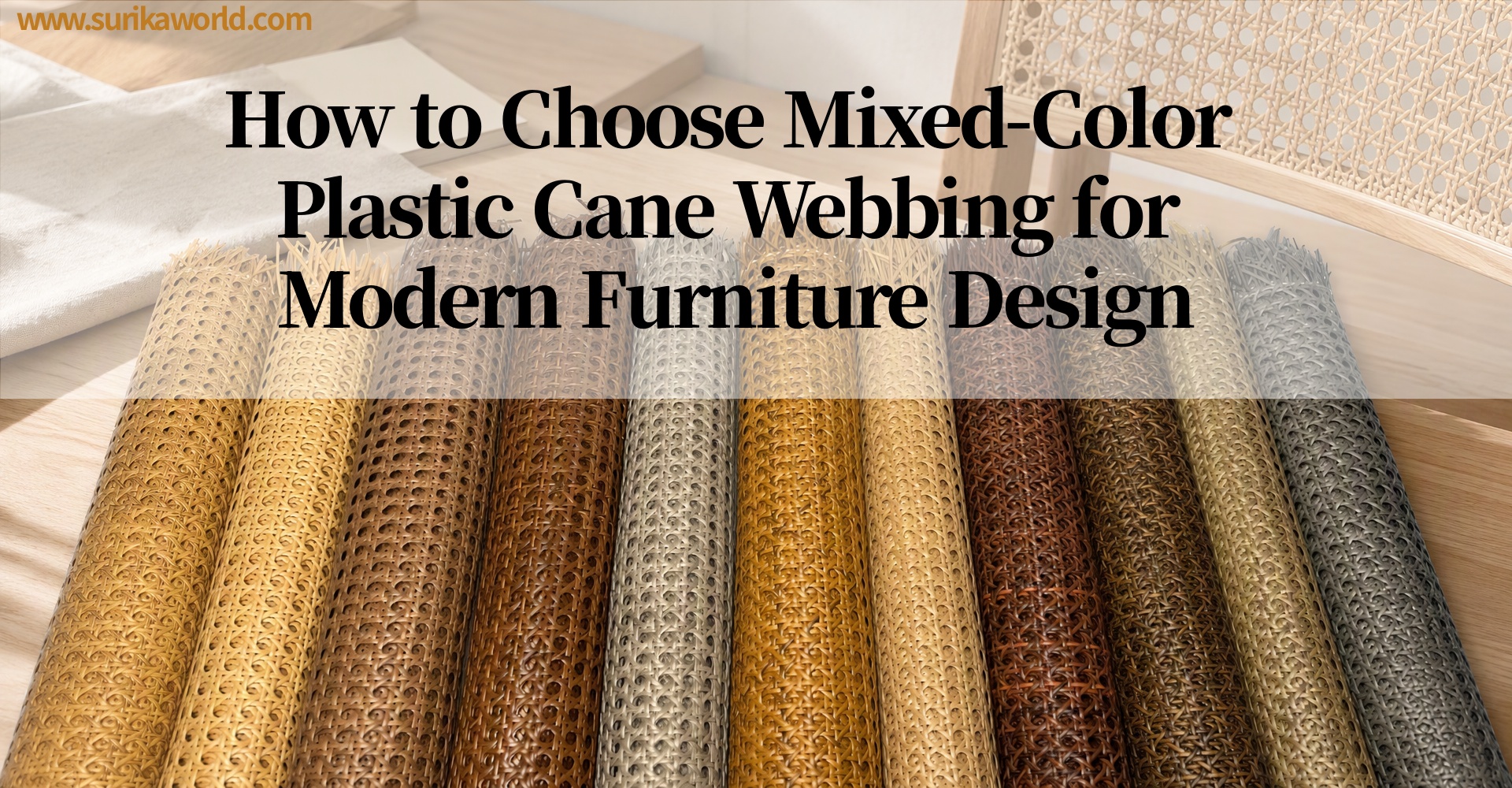
The samples shown above demonstrate how broad this design language can be. The collection moves through walnut, reddish brown, black walnut, wood grain, coffee brown, blue gray, mahogany, ash, off-white, gray white, and willow tones. Rather than treating every color as a separate trend, it is more helpful to group them by the mood they create and the materials they are designed to complement.
This guide focuses on the most versatile color directions and explains how to select plastic cane webbing for modern furniture, hospitality interiors, cabinetry, and decorative panels.
Why Mixed Colors Matter in Woven Furniture
Traditional-looking cane is rarely visually uniform. Natural fibers contain subtle changes in tone, and those variations help give woven surfaces their character. A mixed-color plastic weave follows a similar visual principle: two or more coordinated shades are distributed across the pattern, making the surface appear richer and less mechanical.
This color variation offers several design advantages. It can soften the transition between the woven panel and a wooden frame, help conceal minor dust or everyday marks, and add detail without introducing a bold printed pattern. From a normal viewing distance, the colors blend into a balanced overall tone; at close range, the individual strands reveal more texture and contrast.
For designers who want the appearance of woven cane with a more controlled palette, synthetic rattan webbing also makes it easier to coordinate repeated furniture pieces across a room or product collection. Because the visual effect is built into the weave, the panel can provide decorative interest while keeping the furniture silhouette simple.
1. Walnut and Black Walnut: The Most Versatile Dark Options
Walnut-inspired shades are a practical starting point for residential furniture, boutique hotels, restaurants, and refined office interiors. They work especially well with dark timber, smoked glass, bronze hardware, leather, and warm neutral upholstery.
The regular walnut color in the sample collection has a warmer, softer brown appearance. It can suit mid-century-inspired cabinets, dining chairs, bed frames, and sideboards where the designer wants a classic wood relationship without making the woven panel too dark.
Black walnut creates a deeper and more dramatic effect. Its dark mixed strands can give a cabinet door or chair back stronger definition, particularly when paired with matte black, espresso brown, or deep-stained wood frames. It is a good choice when the cane panel should feel architectural rather than rustic.
When comparing these two shades, consider the size of the woven area. A large black walnut panel may become a strong visual feature, while the warmer walnut option usually feels lighter and more adaptable. For furniture collections that need to coordinate with several brown finishes, a mixed walnut cane webbing for furniture can also bridge small differences between the frame, tabletop, flooring, and surrounding décor.
2. Wood Grain and Mahogany: Warmth with More Visible Character
Wood-grain and mahogany tones are ideal when the woven section is intended to echo the richness of real timber. The wood-grain sample combines lighter and darker golden-brown strands, producing a lively surface that pairs naturally with oak, teak-inspired finishes, and warm-toned laminates.
This option is particularly effective for cabinet fronts, bar units, console tables, and decorative wall panels. The color movement helps a broad panel avoid looking flat, while the open weave keeps the overall piece visually light.
Mahogany introduces more red into the palette. Used selectively, it can add warmth to traditional furniture, club-style seating, luxury hospitality pieces, or interiors featuring burgundy, tan leather, brass, and darker woods. Because reddish tones can become visually dominant, the best approach is usually to repeat the color elsewhere in a controlled way—through stitching, a small accessory, a tabletop detail, or adjacent timber—rather than matching every surface exactly.
Both finishes show why colored cane webbing should be chosen in the context of the complete furniture piece. The same roll can look warmer beside cream upholstery, deeper beside black metal, or more golden under warm interior lighting. Evaluating a physical sample with the actual frame material is therefore more reliable than selecting from a screen alone.
3. Blue Gray and Gray White: A Contemporary Alternative to Brown
Not every woven furniture project needs to imitate natural rattan. Blue gray and gray white offer a distinctly modern direction for designers working with cool neutrals, painted cabinetry, minimalist rooms, or coastal-inspired spaces.
Blue gray is one of the most distinctive options in the collection. Its muted tone can complement charcoal, slate, light gray, dusty blue, and pale wood without becoming overly colorful. It is well suited to statement chair backs, storage cabinets, room dividers, and reception furniture where a conventional brown weave might feel too traditional.
Gray white is quieter and more neutral. It can support Scandinavian-inspired furniture, soft contemporary interiors, and cabinetry in white, greige, or light gray. The mixed tones provide more dimension than a plain white surface, helping the woven pattern remain visible even in a pale color scheme.
These shades are also useful when a designer wants the texture of plastic cane webbing to stand on its own rather than visually merging with a wooden frame. For a crisp contrast, combine blue gray with pale oak or off-white paint. For a tonal effect, pair gray white with brushed metal, cool stone, or similarly muted finishes.
4. Ash, Off-White, and Willow: Light, Natural-Looking Neutrals
Light neutral weaves remain popular because they make furniture feel open, relaxed, and easy to integrate. Ash, off-white, and willow tones each achieve this effect in a slightly different way.
Ash has a pale wood character and works well with light oak, maple-inspired finishes, cream textiles, and clean modern forms. Off-white creates a softer, more decorative appearance and can be used for wardrobes, nursery furniture, bedroom cabinets, or airy hospitality interiors. Willow introduces a gentle green-beige cast, giving the weave an organic tone that pairs well with stone, linen, muted greens, and nature-led color schemes.
For small rooms or furniture with large woven areas, these lighter shades help preserve a sense of visual space. They are also useful when the cane panel is intended to be a subtle supporting texture rather than the main focal point.
A light mixed-color plastic cane webbing can be more forgiving visually than a completely uniform pale surface because its strand variation adds depth. However, the final choice should still take the intended environment and cleaning routine into account, especially for restaurants, family homes, and other frequently used spaces.
How to Match the Webbing with the Furniture Frame
Color is important, but the relationship between the weave and the frame determines whether the final piece looks intentional. Three matching strategies are especially reliable:
Tonal matching
Choose a webbing color close to the frame color, such as walnut webbing with a walnut-stained cabinet. The result is cohesive and understated. Mixed strands prevent the two materials from looking overly uniform.
Controlled contrast
Pair light ash or off-white webbing with a dark frame, or blue gray webbing with pale wood. Contrast clearly outlines the woven section and turns it into a design feature. This approach works well on chair backs, cabinet doors, and headboards.
Color bridging
Select a multi-tone weave containing colors that connect two or more nearby materials. For example, a mixed wood-grain option may link a golden wood frame with darker flooring, while gray white can connect white cabinetry with gray stone. This is one of the strongest practical benefits of colored cane webbing: it does not require every surrounding finish to be an exact match.
Practical Checks Before Placing an Order
Before confirming cane webbing for furniture, request a physical sample and review it under the lighting used in the final space. Daylight, warm LEDs, and cool commercial lighting can change how brown, red, blue, and gray undertones appear.
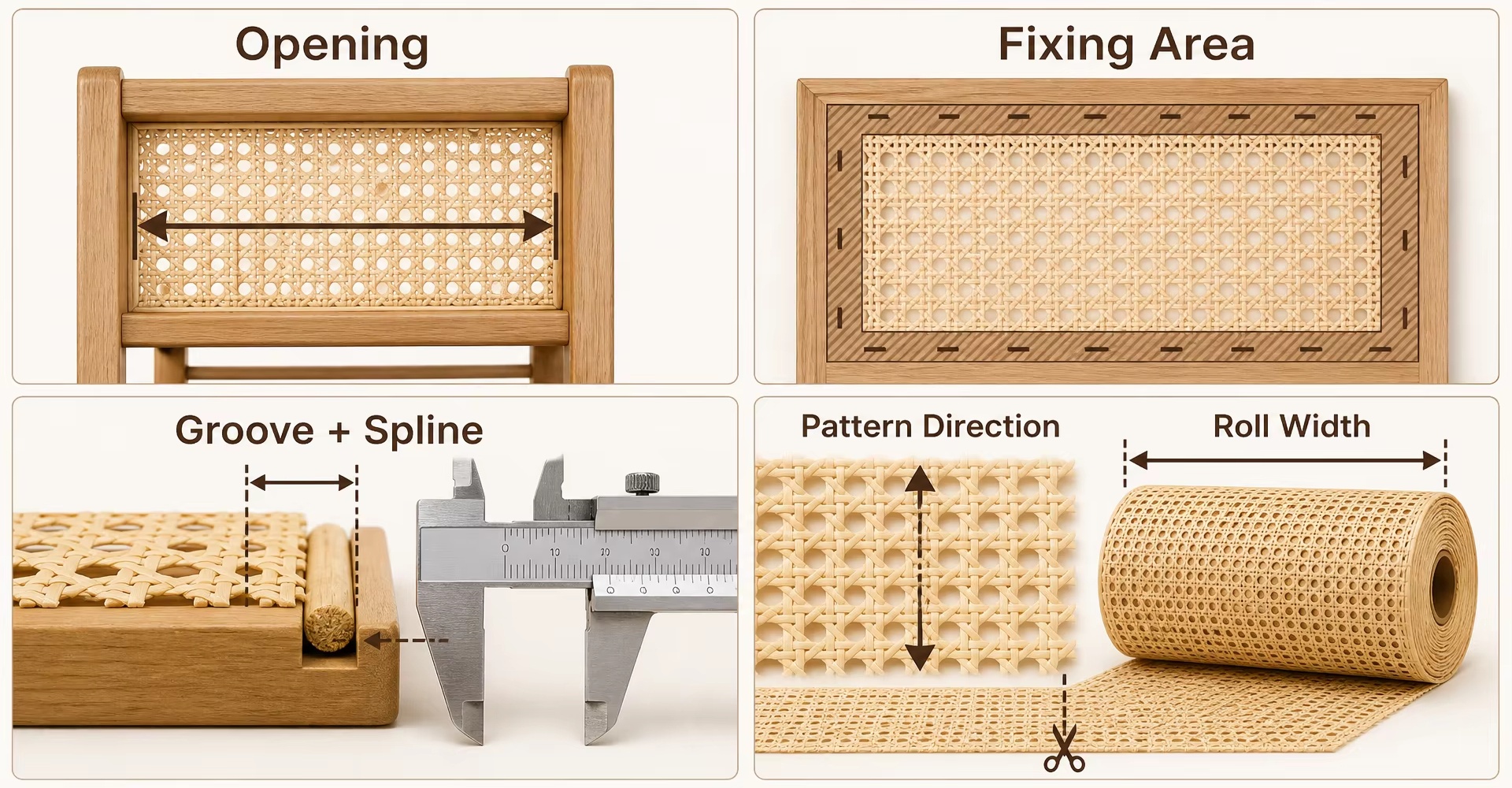
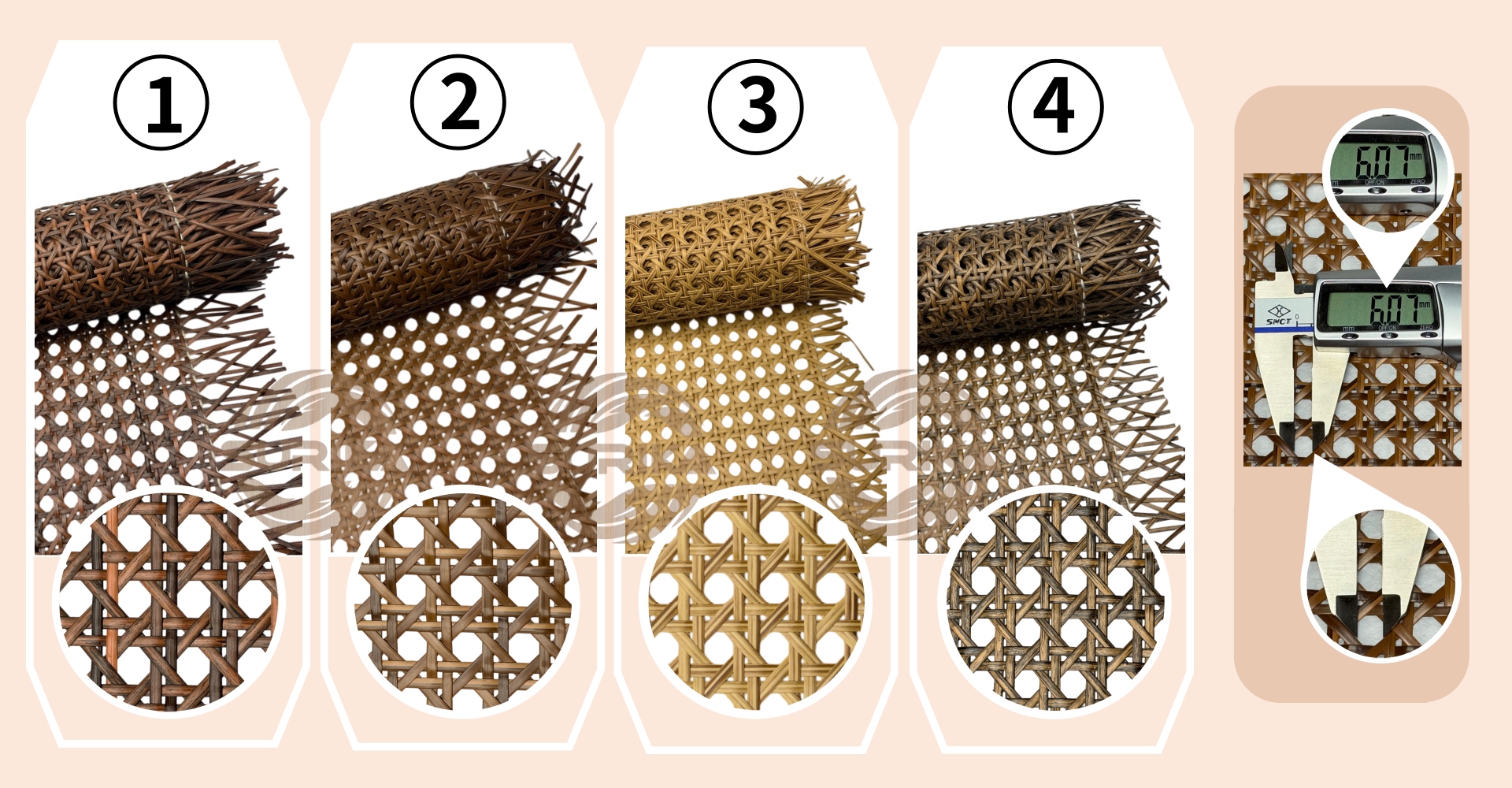
It is also important to confirm the weave pattern, opening size, roll dimensions, strand construction, and installation method required by your project. A color may look excellent, but the webbing must also be suitable for the frame design and intended application. If the furniture will be used outdoors, near a window, or in a high-traffic commercial setting, ask the supplier to confirm relevant performance information for the exact product, including UV suitability, cleaning guidance, and application limitations.
For prototype development, install a sample in a real frame rather than evaluating a loose roll only. Tension, backing color, frame width, and the surface behind the weave can all influence the final appearance. A dark backing may make the openings look more pronounced, while a light backing can create a softer result.
Finally, remember that screen colors are not a substitute for approved production samples. Display settings, photography, and surrounding light can shift the perceived shade. Final color approval should be based on a physical sample from the intended production batch whenever color consistency is critical.
Choosing the Right Color Direction
The best synthetic rattan webbing is not simply the shade that looks most attractive on its own. It is the one that supports the furniture’s material palette, target setting, and overall design story.
Choose walnut or black walnut for versatile, sophisticated furniture with a strong wood connection. Select wood grain when you want greater visual movement and a relaxed natural effect. Use mahogany to introduce controlled warmth and a richer traditional character. Consider blue gray or gray white for a cooler, more contemporary identity. For light and calm interiors, ash, off-white, and willow offer flexible alternatives that keep the woven surface fresh and understated.
At Surika, we continue to explore updated materials and color options for designers, furniture manufacturers, and project buyers. If you are developing a new collection, comparing finishes, or looking for mixed-color plastic cane webbing that coordinates with a specific frame, fabric, or interior palette, share your reference materials and application requirements with us. A focused sample comparison can help you move from an attractive color idea to a more confident furniture decision.
How to Measure Cane Webbing for a Chair or Cabinet: Roll Width, Mesh Size & Spline Size Guide
How to Weave a Rush Chair Seat with Single-Ply Seagrass Rope: A Step-by-Step Guide