How to Weave a Rush Chair Seat with Single-Ply Seagrass Rope: A Step-by-Step Guide
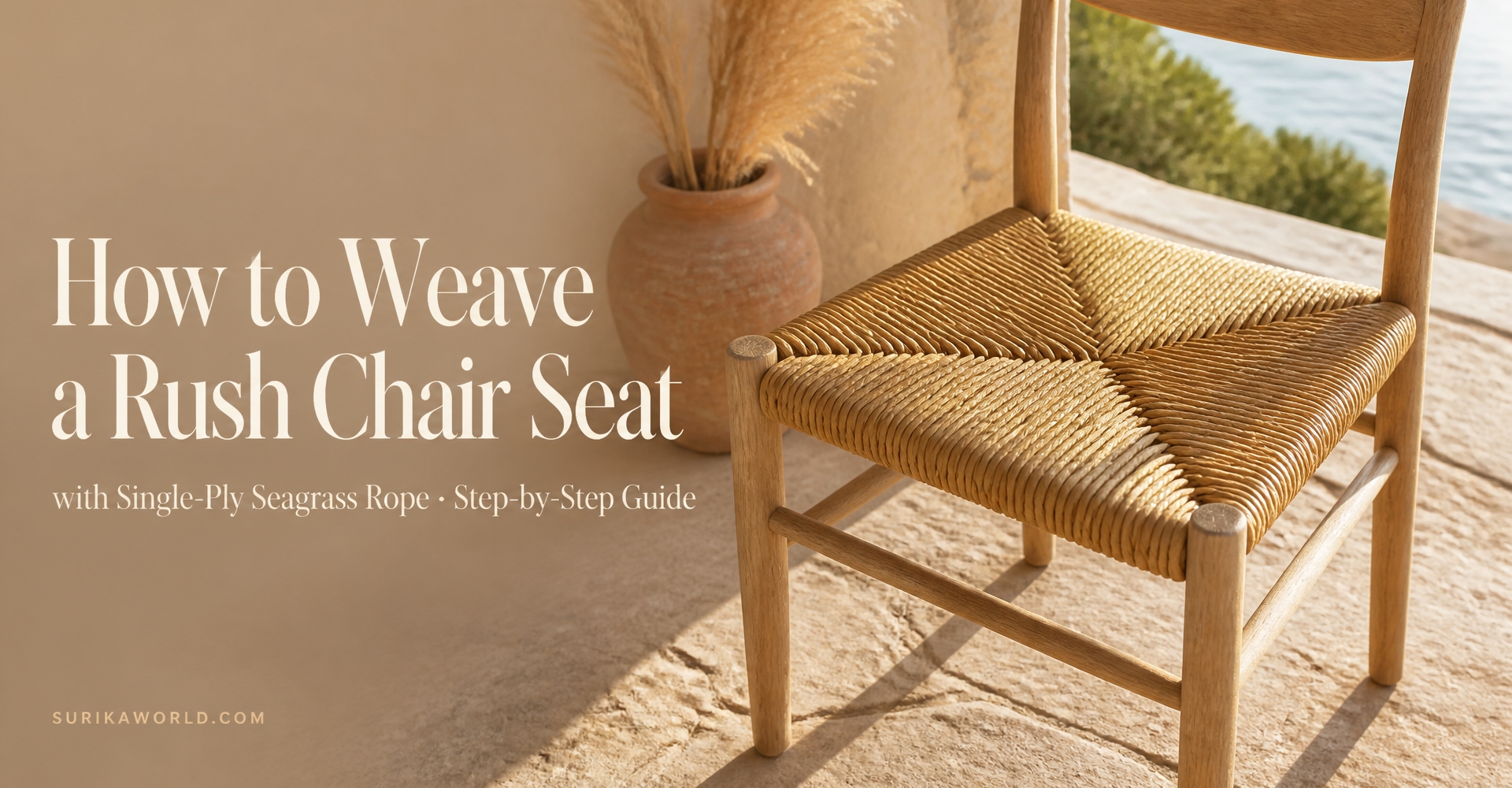
How to Weave a Rush Chair Seat with Single-Ply Seagrass Rope: A Step-by-Step Guide
If you have ever run your hand across a beautifully finished rush chair seat and wondered how it was made, you are closer to doing it yourself than you think. Seagrass rush seating is one of the oldest and most satisfying chair-weaving traditions in the world — and with the right material and a clear process, even a first-time weaver can produce a seat that lasts decades.
This guide covers everything: what seagrass rope actually is, why single-ply seagrass rope is the preferred choice for rush seat weaving, how to prepare your chair frame, and the step-by-step weaving sequence that takes you from bare rails to a finished, tension-perfect seat.
What Is Seagrass and Why Is It Ideal for Rush Chair Seats?
Seagrass is a marine flowering plant harvested from shallow coastal waters, primarily across Vietnam, China, and Southeast Asia. The harvested grass is dried, then twisted into rope form — and it is this naturally hollow, slightly coarse fibre that gives seagrass rush seats their distinctive texture, gentle sheen, and remarkable longevity.
Compared to synthetic alternatives, natural seagrass rope offers several structural advantages for chair weaving:
-
Natural moisture resistance — the waxy surface of seagrass fibre repels light humidity, making it suitable for both indoor dining chairs and conservatory furniture.
-
Inherent tensile strength — seagrass rope for chair seats can bear significant weight without stretching out of shape once properly tensioned and dried.
-
A surface that improves with age — unlike foam or fabric, a woven seagrass seat develops a warm, golden patina over years of use, becoming more characterful rather than worn-looking.
-
Biodegradable and sustainable — seagrass is a fast-growing, renewable resource that requires no pesticides or irrigation to cultivate.
For rush seat weaving, the fibre count of your rope matters. Single-ply seagrass rope — a single continuous strand twisted from raw seagrass fibres — is the industry-preferred choice. It is more pliable than two-ply, tracks the weaving pattern with less bulk, and produces a tighter, more uniform surface on the finished rush chair seat.
What You Will Need
Before you begin, assemble the following:
-
Single-ply seagrass rope (3–5 mm diameter is standard for most dining chair seats)
-
A stripped chair frame with clean, smooth rails — no splinters, no old staples
-
A bucket of warm water
-
Scissors or a sharp utility knife
-
A wooden mallet or rubber hammer
-
Foam padding offcuts (optional, for square frames)
-
A tapestry needle or caning awl for tucking ends
-
Cotton twine for temporary ties if needed
 Step 1: Prepare the Frame
A good rush seat starts with an honest assessment of your frame. Check all four rails for cracks, loose joints, or rough patches. Sand any sharp edges that could abrade the rope over time. If you are restoring an antique chair, strip all remnants of the old weave completely and clean the rails before proceeding.
For square or rectangular seat frames, you can begin weaving immediately. For trapezoidal frames (wider at the front than the back — common on traditional farmhouse chairs), you will need to fill in the difference at the front two corners first. Attach short lengths of seagrass rope across the front corners, wrapping the front rail until both side rails appear equal in length from the front. This ensures the central weave pattern runs perfectly square.
Step 2: Soak the Seagrass Rope
This step is non-negotiable for natural fibre. Submerge your coil of single-ply seagrass rope in warm water for 20 to 30 minutes. The rope should become noticeably more pliable — slightly rubbery rather than stiff — but it should never feel waterlogged or begin to unravel.
Do not over-soak. Natural seagrass rope that has been left in water for more than an hour loses structural integrity in the fibre and becomes prone to mildew during the drying phase. Soaked correctly, the rope handles beautifully and tensions to a firm, drum-like surface as it dries.
Remove the rope from the water and allow the surface to drain for two to three minutes before you begin weaving.
Step 3: Anchor the Starting End
Tie the end of your seagrass rope securely around the left rear rail with two or three tight half-hitches, positioned close to the rear left corner of the frame. Leave a short tail of approximately 15 cm — you will tuck this in later.
For a neater finish, some weavers staple the starting end to the underside of the rail first, then begin wrapping over the staple. Either method works; the goal is a secure anchor that will not slip as you build tension across the frame.
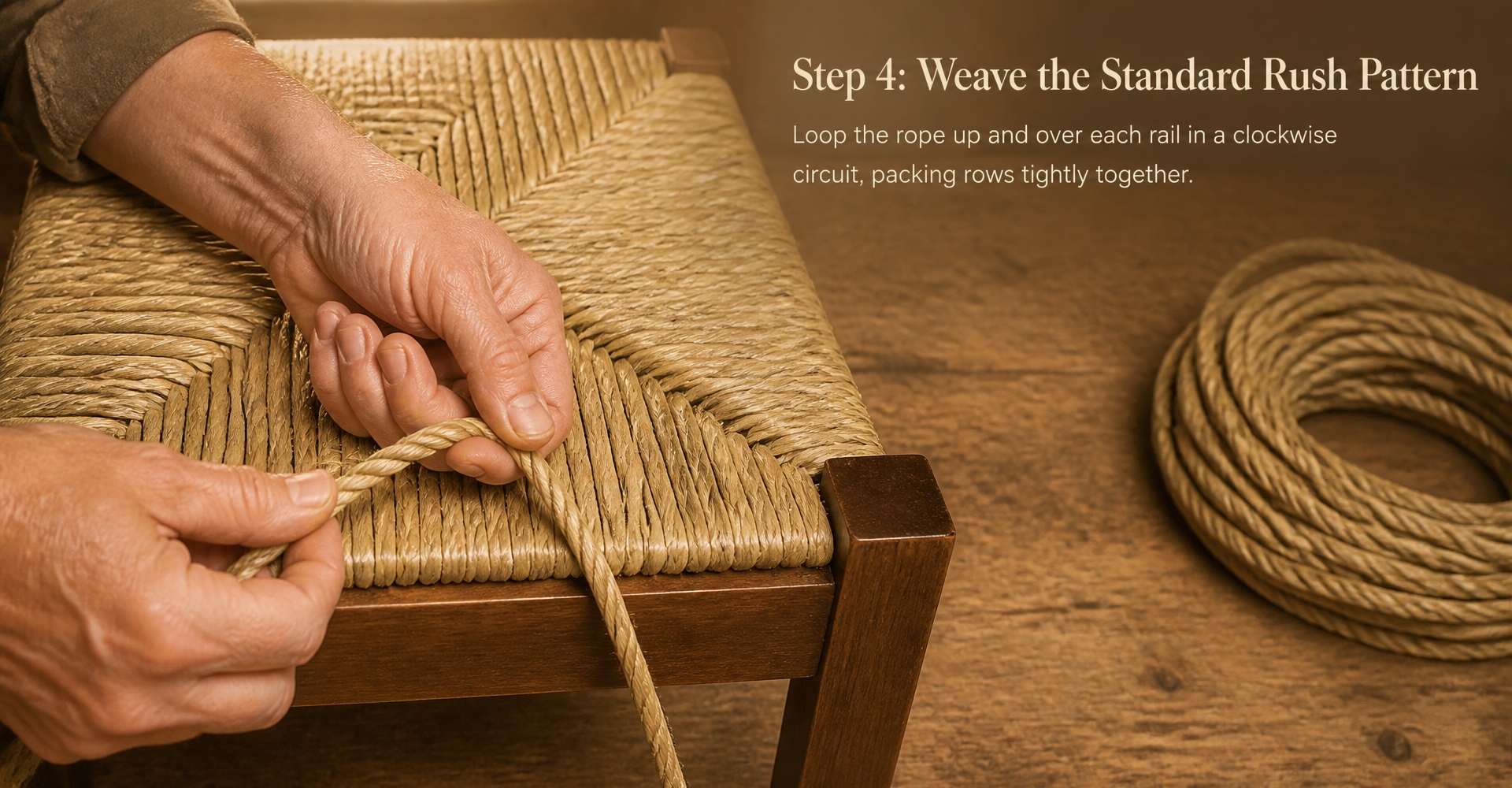
Step 4: Weave the Standard Rush Pattern
The classic rush chair seat weaving pattern — used for centuries on everything from English Windsor chairs to French provincial dining sets — follows this sequence at each corner:
-
Bring the rope up and over the front rail, from front to back.
-
Carry it across the top of the seat opening to the right.
-
Up and over the right rail, from right to left.
-
Carry across underneath back to the left.
-
Repeat at the rear left corner, then the rear right corner, working in a continuous clockwise circuit.
At each corner, the rope creates an L-shaped wrap that builds up two parallel ridges — the characteristic "padded corner" look of a traditional rush seat chair.
Work steadily around all four corners, keeping even tension with each pass. Every few rounds, use your mallet to tap the rows firmly together — tight, parallel rows are the hallmark of a professional hand-woven rush seat. Avoid pulling too aggressively; you want snug tension, not strained fibre.
As your working rope runs short, join a new length with a reef knot positioned on the underside of the frame, where it will be invisible from above.
Step 5: Fill the Centre
As the woven area grows inward from all four sides, you will eventually be left with a central rectangular opening. At this stage, stuff the space beneath the top layer of rope with foam offcuts or coiled scrap seagrass rope. This padding raises the centre of the seat to a comfortable dome, prevents the surface from feeling hollow, and significantly extends the life of the weave by distributing weight more evenly.
Once padded, continue weaving across the remaining central rows until the opening closes completely. Tuck the final end of rope down through several rows using a caning awl, and trim cleanly.
Step 6: Allow the Seat to Cure
Leave the finished seagrass rush seat to dry in a warm, well-ventilated room for a minimum of 24 hours — 48 hours is better. As the natural seagrass rope dries, the fibres contract and the entire seat self-tightens to a firm, stable surface. Do not sit on the chair or place any weight on it during this period.
Once fully cured, you can apply a light coat of linseed oil to the weave to nourish the fibres and deepen the natural colour — though many weavers prefer to leave the seat untreated and allow the patina to develop naturally over time.
Sourcing the Right Seagrass Rope
The quality of your finished seagrass rush chair seat is only as good as the material you start with. Key specifications to look for:
-
Fibre consistency: uniform twist with no thin spots or loose ends along the coil
-
Moisture content: rope that has been correctly dried to an optimal humidity level — too dry becomes brittle; too moist risks mildew in storage
-
Diameter tolerance: for standard dining chairs, 3–4 mm is ideal; for heavier occasional chairs or rocking chair seats, 4–5 mm provides better coverage and support
At Surika, our single-ply seagrass rope is produced from premium harvested seagrass, processed to consistent diameter and moisture specifications, and available in bulk rolls suited to both small restoration workshops and high-volume furniture manufacturers. We also supply the new rush chair seat — a ready-to-install woven seat pad crafted entirely from single-ply seagrass rope — for buyers who need a finished product rather than raw material.
Whether you are weaving from scratch or sourcing finished components, the right material makes every difference. Contact the Surika team for specifications, samples, and wholesale pricing.
Surika (Suzhou Surika Co., Ltd.) has been supplying natural woven materials — including seagrass rope, rattan cane webbing, paper rope, and raffia — to furniture makers, designers, and restoration workshops worldwide since 2015.
How to Choose Mixed-Color Plastic Cane Webbing for Modern Furniture Design
How to Install Cane Webbing: Press-in Spline Method vs. Staple Method